Shaping Clarity: How Alexandru Dina-Gargala Transformed Temedica’s Product Operating Model
When Alex Dina-Gargala stepped into his new role as VP of Product & Technology at Temedica—a health insights company turning real-world patient data into actionable evidence—he saw both opportunities and areas to strengthen. The product teams were delivering meaningful work, but without a shared product operating model it was harder to reach the optimal level of clarity, alignment, and autonomy.
In just six months—and while still navigating the daily demands of leadership—Alex and his team led a remarkable transformation. Through strategic coaching, deep listening, and cross-functional collaboration, he crafted a clear, layered product strategy and vision that empowered teams, enabled better executive dialogue, and created alignment across the company.
In this success story, we’ll take you behind the scenes of that transformation. We’ll explore the tools Alex used to bring direction and clarity to his teams and the organization at large. And we’ll show you what a real-world transformation looks like when a committed leader rolls up their sleeves and gets to work.
This story also contributes to the broader conversation around Product Operating Models—one that’s gained momentum through the work of thought leaders like Marty Cagan and Melissa Perri and Denise Tilles (who explore the concept in their book Product Operations). If you’re wondering whether your company is ready for this type of shift, you might also want to check out my article: Is Your Company Ready for Product Operating Model Coaching?
This interview with Alex was conducted and edited by my blog editor, Melissa Suzuno.
Can you share a little bit about your company, Temedica—what are you doing and who are your customers?
Personalized healthcare has always been our mission, and we focus on achieving it in two main ways:
1. Omnichannel patient engagement
We support people living with chronic conditions or going through major health transitions by offering simple, connected support across digital channels. Instead of relying on just one app or tool, we combine different touchpoints to stay relevant for patients as their situation changes.
This support helps people understand their condition, keep track of symptoms or daily habits, prepare for doctor visits, and make informed decisions about their care. The goal is to reduce confusion and fragmentation and give patients support that fits into everyday life.
With patient consent, these interactions also create real-world insights over time. This happens naturally as people use the support they find helpful. These insights help improve the understanding of how conditions are managed outside of clinical settings and where patients need better support.
At its core, this approach helps patients feel more prepared when talking to healthcare professionals, gives them a clearer picture of their own health, and helps improve care for others facing similar challenges.
2. Market intelligence for pharma partners
Second, we provide insights to our pharma partners, helping them understand how their therapies are being used in the real world and how patient and doctor behaviors are shaping outcomes. We help answer questions like:
Where is this therapy being prescribed, and by which physicians?
What do the patient populations look like in terms of demographics, treatment settings, etc.?
Before a therapy is launched, who are the physicians currently treating this condition, and where are they located?
After launch, how are adoption patterns evolving, and how does this compare to market expectations?
By working with anonymized real-world data, we help partners build a clear picture of how therapies are used in everyday care. This allows them to plan launches more effectively, understand adoption over time, and improve patient support based on real-world needs.
At what point did you realize that you needed to initiate a broader transformation effort?
Every company I’ve joined in the past couple of years has been in some form of transformation or rolling out a product operating model.
When I started my journey at Temedica, I took time to understand how we worked, drawing on product best practices I’ve learned from thought leaders like Marty Cagan, Jeff Patton, Melissa Perri, and others, as well as insights from conferences and my own hands-on experience.
A few things stood out:
Teams were all working hard, but we weren’t always pulling toward the same clear priorities and outcomes.
Our focus was often on delivering features and projects, but not always starting with the bigger ‘why,’ what problem are we solving, why does it matter, and is it meaningful enough to really move the needle?
Discovery work was happening, but not yet as a regular, structured, cross-functional practice. We didn’t have a continuous loop from opportunity to discovery to solution to outcome running alongside delivery and our strategy.
We had quarterly OKRs in place, but the link between those goals and the work in our delivery tools wasn’t always clear, which sometimes led to competing priorities. Everyone was working hard, but not always in the same direction.
I often compare it to climbing a mountain: We all want to reach the same peak, but we need to agree on the path, the gear, and the approaches that will get us there and be ready to adapt as market shifts, client needs, or technology trends change the terrain. And just as importantly, we need to ask ourselves: Who do we need to become, and how do we need to train and grow, to actually reach that summit?
Why did you bring this topic into coaching? What did you feel was missing from your leadership view at the time?
I really cherish having an informed point of view, one that’s as neutral as possible, even though no one is ever 100% neutral. Like many leaders I respect, I work with a coach to sharpen my thinking and challenge my assumptions.
The reason I sought out Petra was simple: I wanted someone who could push me, help me refine strategies and tactics, and make sure our transformation had real momentum.
I knew her from Product at Heart, had read her blog, used the PMwheel, and read her book, all of which convinced me she had the depth and experience I was looking for. I also wanted that external, unbiased perspective—or at least biased in the right way.
One of your early realizations was that the existing company vision wasn't actionable for product teams. What helped you identify that gap?
I started by looking at how we worked and what we were actually delivering. We were shipping a lot of features and running custom projects—but when I mapped them back to the bigger company vision, the connection wasn’t always there. It felt more like ticking boxes than making real progress toward where we wanted to go. And that kind of approach just doesn’t scale.
When I joined, the pace was relentless. Priorities shifted, deadlines were tight, and the usual surprises cropped up—bugs, people out sick, last-minute requests. All of that piled up into delays and frustration for the teams.
That’s when it became clear: The answer wasn’t simply to work faster or harder. We needed to change how we worked at a fundamental level.
Could you walk us through how you approached creating directional clarity?
We kicked things off with a lot of conversations—interviewing prospects, customers, and even former prospects who decided not to sign. We also went back through every custom feature or project we’d ever done.
From there, we started spotting patterns—recurring problems people were facing. That work became the foundation for everything we built afterward.
In our ecosystem, we have three main stakeholders: healthcare practitioners (HCPs), patients, and pharma partners. They’re the three sides of our triangle. We needed a shared vision and a flow that showed how all three move through the journey together.
Petra shared a great example from Airbnb, showing both host and guest journeys step by step, with the product features that support them. Inspired by that, we created our own story map: frame by frame, what a patient goes through.
We didn’t stop there. We mapped the HCP side, too—what information they receive, how they make decisions, and what their interactions look like. Then we layered in pharma: what they’re doing at each stage, how they support the process, and where they connect with both the patient and HCP journeys.
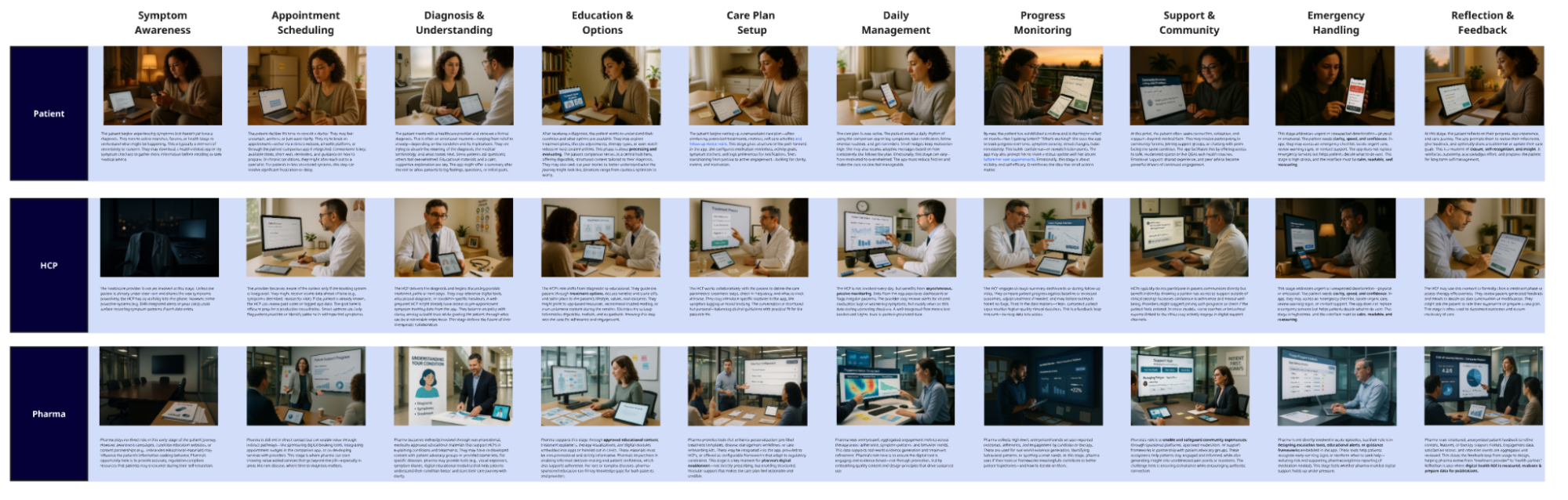
For example, a patient notices symptoms and then books an appointment—but the time between those steps can be long, depending on how the symptoms present. After seeing the doctor, they get a diagnosis, but for chronic diseases, that can take multiple visits and sometimes misdiagnoses.
With that full journey mapped, the teams moved into deeper discovery: talking with patients, engaging pharma partners, exploring solutions, scanning the market, and testing ideas with real users.
We involve patients in every step because they’re the people we want to help most directly. But we also pay close attention to HCP and pharma perspectives, ensuring solutions deliver value across the ecosystem.
For patients, we look for changes we can see—higher satisfaction, better usage, or measurable shifts in analytics, like sticking to lifestyle goals or taking medication on time. For HCPs and pharma, we look at how our tools fit naturally into their workflows and help improve outcomes for the people they care for.
Do you have any insights or learnings you can share about this process of developing visual artifacts?
I’ve always appreciated Ray Dalio’s approach to principles—defining the rules you want to play by so everyone is clear on how decisions get made.
We’ve taken that thinking and developed our own set of principles for how we approach research, product management, and other areas of our work. They give us a shared reference point. If we see something that doesn’t align, we can point to the principle and say, “This time we didn’t fully live up to it—how do we do better?” That opens the door for constructive conversations.
You can have a clear vision, but without shared principles, each person might take a different path toward it. The principles keep us moving in the same direction.
One example relates to product analytics: Every metric must be actionable. There’s no point tracking something if we’re not going to act on it. We avoid vanity metrics for the sake of reporting and focus only on what can drive meaningful decisions.
How long did it take to create the most recent version of the strategy and vision materials? Was there any earlier work that you were able to build on or reuse?
We didn’t start from scratch. We built on what we already had evolving past work, adding recent learnings, incorporating market feedback, and reflecting on how we’ve been performing as a company, how we sell, and what customers are telling us.
In total, it took about two to three months to consolidate, refine, and shape the new approach. And this wasn’t just a product effort, it was a huge cross-functional collaboration involving engineering, infrastructure, data, UX, patient marketing, and commercial. We needed everyone in the room to make something that was meaningful and that we could all rally behind.
The result was formalized on a single page that included the journey map I mentioned earlier. We also built clickable prototypes, because it’s much easier to align people around visuals than plain text. Once those were in place, alignment became much easier, the discussions shifted from big foundational debates to smaller, more productive iterations.
What role did team workshops and collaboration play in shaping this work?
A huge one. You can’t build a vision without collaboration. For me, it’s critical to run workshops and have open discussions with the team. I often use Pip Decks to help structure them.
We did a lot of exercises together—from identifying our strengths and weaknesses to competitive analysis. I’d have people work individually first, then come together to share ideas (e.g., using Private mode in Miro so thoughts are formed independently, but not in isolation).
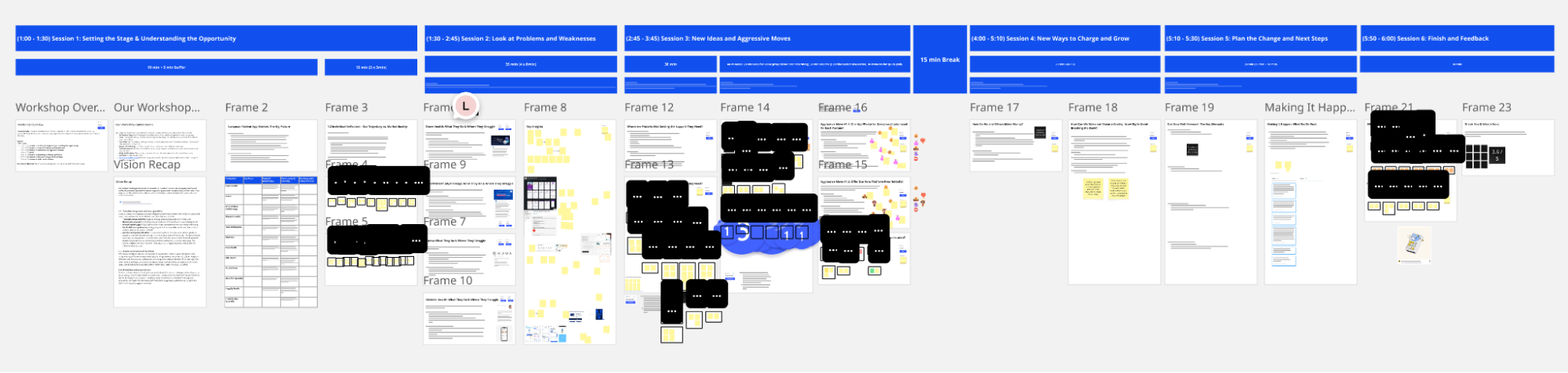
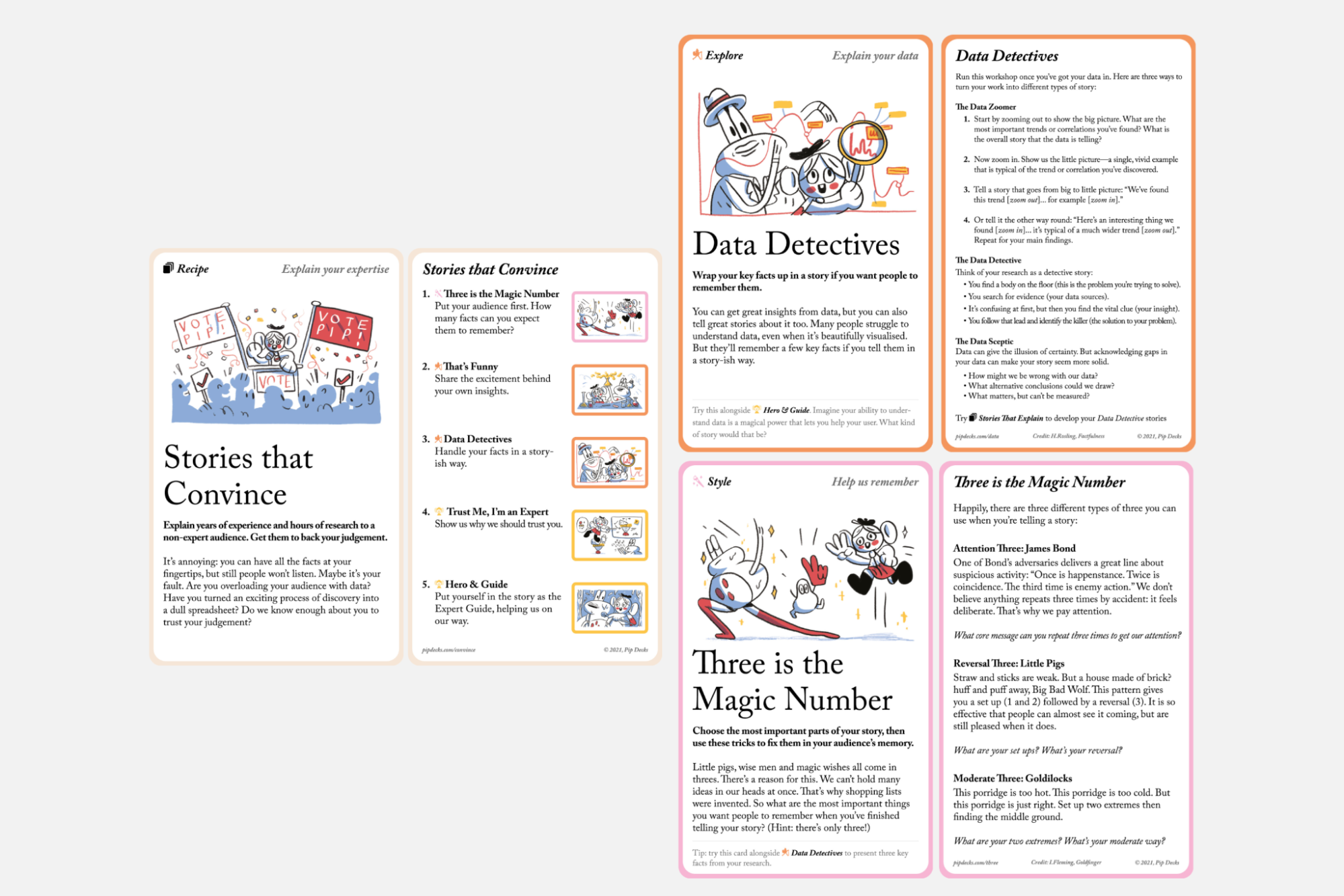
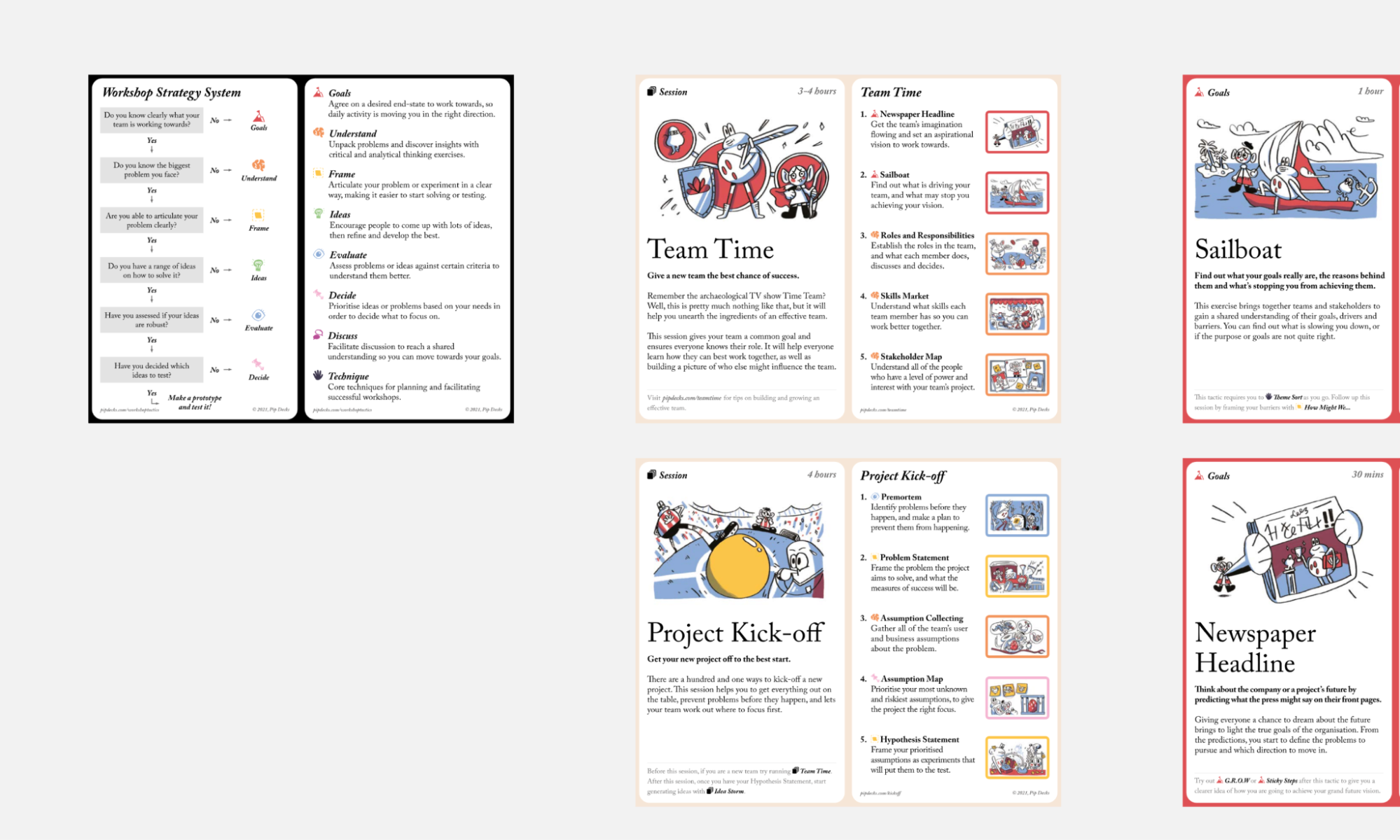
This ties back to our principle of transparency and the belief that the best solutions come from solving problems together. The vision and outcomes we have today are the result of many workshops that looked honestly at our challenges and opportunities from multiple angles.
One big shift is that now, teams themselves propose roadmap changes and flag when goals need to shift. That’s a huge change from two years ago. We’re flexible enough to adjust OKRs mid-cycle if needed, because the team knows the direction and owns their path.
In other companies, changing goals can take several loops before you even get approval, then more time to implement. For us, the last time we made this kind of change, it took about a week and a half to operationalize—because it came from the team.
Can you share any key takeaways about using visual storytelling tools to help you facilitate conversations?
Honestly, I think it’s one of the most important things any product person can do. It’s hard, but it’s also the only reliable way to get people to rally around the same idea. A visual artifact makes the concept tangible: people can see it, react to it, and actually understand it, even if it’s just a rough wireframe.
Even if you’re great at verbal storytelling, there’s no excuse not to add visuals today, there are too many AI tools available to help you. Even an imperfect visual will get you far enough to secure buy-in or spark the right criticism.
We built ours in Miro using the wireframe functionality, which I recommend to anyone who doesn’t want to jump straight into something like Figma AI (Make) or other advanced tools (e.g. Stitch, MagicPatterns, Replit, Lovable).
How did this work impact team structure or dynamics?
We’d already started moving toward cross-functional teams with trios some time ago, but the change over the past few months is in how those trios actually work together. By embedding the product operating model, collaboration has become more intentional.
Teams now bring in the right experts at the right moment not because it’s a box to tick, but because they see how it improves decisions and outcomes. That shift has made work flow more smoothly and reduced the back-and-forth that used to slow us down.
What else has changed at Temedica since you put these new elements in place?
Our ability to drive meaningful outcome changes is now measurable. We’ve seen important features being used more because of the way we work, and that’s shortened our iteration cycles significantly.
Changes or new iterations are happening faster, always with the goal of hitting the outcomes we’ve set. Recently, we made more incremental improvements in a single period than at any other time in the company’s history. We’ve also seen meaningful gains across activation, retention, and other key app metrics.
Part of our work is future-focused, making sure we’re setting ourselves up for what’s ahead, and part is about making the present as strong as it can be. Those two streams came together through the vision and product operating model workshops, which ran in parallel and shaped how we work today.
What are you most proud of from this transformation journey?
Seeing the results of this transformation. In many transformations, you might lay the groundwork but not be around to see the real impact, sometimes it’s your successor who gets that view. I’m lucky that ours moved quickly enough that I can see the results first-hand.
I’m also proud of how our teams came together to make it happen. The level of collaboration and adaptability was exceptional. I’ve never seen a company adjust and move this fast before.
None of this would have worked without a team that was genuinely open to changing how they worked—that's not something you can take for granted.
If another product leader were to go about a similar initiative, what advice would you give them?
First, if you’re not yet familiar with the product operating model, read Marty Cagan’s Transformed. Use the questions in that book, or your own observations if you’ve worked in a modern product environment before, to diagnose what’s most critical to address in your context.
The earlier you start on those priorities, the better. My biggest learning is: Do the diagnosis quickly, gather enough evidence, and then act. In a startup, time is the most valuable resource you have. You don’t have the luxury of long timelines. Speed matters if you want to make meaningful changes while you’re still there to see them.
At the same time, don’t lose people by changing everything chaotically. They need to understand the “why” behind what you’re doing. Pair clear storytelling with smart prioritization of your product operating model improvements, and you’ll bring people with you instead of leaving them behind.
What about working with Petra specifically—how did she support you?
Petra combines deep product expertise with experience running conferences and collaborating with some of the best people in the field. It’s a rare mix that gives her both a broad perspective and the ability to go deep on specifics.
We had detailed sessions, each focused on a specific challenge I was dealing with at the time. She would recommend materials, share examples, and challenge my thinking, which helped me spot areas where I needed to adapt, learn more, or strengthen my skills.
She gave me further reading, homework, and thought exercises, and we had very open conversations. That’s the key for me: having a partner who is neutral (or biased in the right way) and can support you through big challenges and transformations.
As a product leader, you’re often the only one in your role at the company. It can be hard to find someone who has the same depth of knowledge and can challenge your thinking in a meaningful way. Petra brought that, and that’s why I chose to work with her.
Final thoughts from Petra
When Alex reached out for coaching, he already had a clear sense of what needed to change. What followed was an intense six-month period of reflection, strategy work, collaboration, and execution. And while I had the joy of supporting him in coaching sessions, the real credit goes to Alex and the work he put in between those calls.
He didn’t just spot the need—he rolled up his sleeves and created real change. From mapping user journeys to crafting a high-level strategy document, from aligning stakeholders to creating BI dashboards, he made tangible progress. And all of this while handling the day-to-day responsibilities of a demanding leadership role.
We don’t yet have enough detailed examples of product operating model transformations out in the open. That’s why stories like this one matter. Alex’s work provides a concrete, visual example of what’s possible—and hopefully, just like the Airbnb storyboard inspired him, his story will inspire others to start shaping clarity in their own organizations.